
Card spotlight
Charizard-GX (Hidden Fates): What It Is and What It's Worth
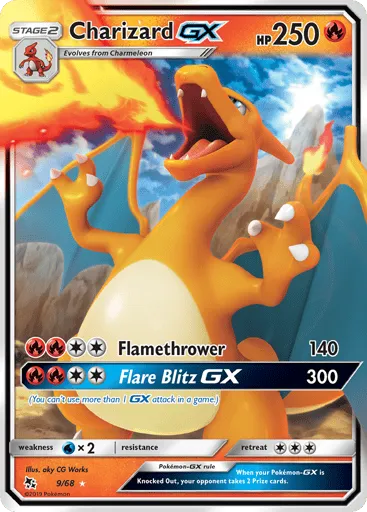
Rare Holo GX
- Set
- Hidden Fates
- Number
- 9/68
- Rarity
- Rare Holo GX
Check prices: eBay sold · TCGplayer
CardOps may earn a commission on purchases made through these links.
Market price via TCGplayer (through Scrydex); graded values via Scrydex. Card image via the card's image source (Scrydex for English cards, pokemontcg.io for older rows). CardOps is an independent tool, not endorsed by any publisher or grading company.
Hidden Fates sold out so fast on release that it got a second print run, and that history still shapes how this Charizard trades. Here's what the GX is worth raw, and what actually moves the number.
The Charizard-GX from Hidden Fates (9/68) is the set's headline pull, and the set itself is a case study in what a shortage does to a market. Hidden Fates launched in 2019 undersupplied, buyers who missed the first run paid steep premiums for months, and a later print run eased that squeeze. None of that history shows up on the card itself, so a dealer pricing a copy today needs to know what they're actually holding and separate nostalgia from current comps.
Why this card still gets attention
Hidden Fates wasn't just another expansion. It was a smaller-than-usual set built around Shiny Vault cards and a handful of marquee non-shiny pulls, and Charizard-GX was the set's biggest draw for players and collectors alike. The scarcity story from launch, cards that were genuinely hard to find at retail for weeks, is part of why the set has staying power years later. That reputation keeps the card on buyer want lists even now that supply has caught up.
Know which Charizard you're holding
Hidden Fates has more than one Charizard, and mixing them up at the table is an easy way to misprice a card. This spotlight is specifically the Rare Holo GX at 9/68, the standard pull from a Hidden Fates pack. The set also has a Shiny Vault Charizard with its own number and look, plus tin-exclusive variants. Check the card number and the exact art before you quote a price. A buyer who knows the difference will notice fast if you don't.
How the reprint affected the market
A second print run doesn't erase a card's history, but it does change how it trades going forward. Early scarcity pricing cools off once more copies are in circulation, and a card settles into a steadier, more comp-driven range. For a dealer, the lesson travels beyond this one card: when a set gets restocked, re-check recent sold prices instead of pricing off what the card did during the shortage. See what reprints do to value for the general pattern.
How condition and grade move the number
Raw copies in played condition move quickly at a low price point, which makes this a reasonable card to stock in bulk if you buy right. The real spread shows up at the top: a clean, well-centered copy that grades well is worth multiples of a raw NM copy, and population reports show plenty of submissions chasing that gap. If you're deciding whether a copy is worth sending in, read it carefully for centering and edge wear before you commit to grading fees. See when to grade a card instead of selling raw.
Pricing it at a show
At this price point, speed matters more than haggling. Anchor to recent sold comps for the exact variant and condition, price fairly, and move on to the next buyer. It's a good card for building trust with new customers: a fair price on a recognizable Charizard is an easy way to turn a browser into a repeat customer. See reading comps like a pro for how to pull that number fast at the table.
Questions dealers ask
Is $10 the most this card can sell for?
No. That figure is a dated raw market reference for the standard holofoil, not a ceiling or a live quote. Graded copies, especially high grades, trade far above it. Always check current comps for the exact variant and condition before you buy or sell.
Does the second print run make this card less valuable?
It means more copies exist than during the initial shortage, which is part of why raw prices have settled lower than they were at launch. It doesn't change what a well-graded copy is worth; that market runs on its own supply of high grades, not the raw print run size.
Which Hidden Fates Charizard is this?
The Rare Holo GX numbered 9/68, the main-set pull. Hidden Fates also has a separate Shiny Vault Charizard and tin-exclusive variants with their own numbers and art; check the card before you price it.