
Card spotlight
Giratina V (Lost Origin): What It Is and What It's Worth
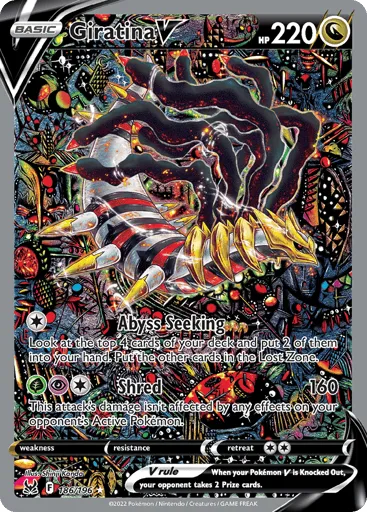
Alternate Art
- Set
- Lost Origin
- Number
- 186/196
- Rarity
- Rare Ultra (Alternate Art)
Check prices: eBay sold · TCGplayer
CardOps may earn a commission on purchases made through these links.
Market price via TCGplayer (through Scrydex); graded values via Scrydex. Card image via the card's image source (Scrydex for English cards, pokemontcg.io for older rows). CardOps is an independent tool, not endorsed by any publisher or grading company.
Lost Origin's value held up at a lot of tables on the back of one card. Here's what the Giratina V alternate art is and how to think about pricing it.
When Lost Origin released, most of the set settled into bulk pricing fast. The Giratina V alternate art did not. It became the card dealers pulled out for a closer look, and the one buyers walked up to a booth specifically to ask about. If you stock vintage-leaning modern sets, understanding why this one card carries a set's reputation helps you buy it right and price it with confidence.
What makes it a chase card
The alternate art treatment replaces the standard VSTAR-era illustration with a full-scene piece that reads as fine art more than a game piece, the kind of card that stops a buyer flipping through a case. Giratina is a well-known Pokémon with its own dedicated collector base, and the alt art slot in a set keeps the print run tight relative to demand. That combination, a recognizable subject plus a scarce, standout printing, is what separates a card like this from the rest of its set.
How condition and grade move the number
On a card this sought-after, condition does a lot of the pricing work. Centering on alt arts tends to run tight to the edge, and surface scratches show up more on the dark background of this particular illustration than they would on a lighter card. A raw, Near Mint copy anchors the price above; a played copy with edge whitening or a visible scratch sells for meaningfully less, and you should say so upfront rather than let a buyer find it themselves.
Grading changes the scale entirely. PSA 10 copies of this card have traded at a market estimate well above the raw figure, roughly four times the raw price as of this snapshot. That gap is why some vendors hold a clean copy and send it in rather than selling it raw. It is a market estimate, not a comp or a guaranteed sale price, and it moves with the grading market.
Pricing it at a show
Start from recent sold comps for this exact printing and condition, not from the highest asking price you can find online. A card with this kind of reputation attracts optimistic listings; your job is to price to what it actually clears. The figure above is a dated TCGplayer market reference, not a live quote, so check current comps before you commit cash to a buy or quote a number to a seller across the table.
Know your floor before the conversation starts. A card at this price point can move a show's whole P&L on its own, so record what you paid and what you need to clear before you negotiate, not after.
Questions dealers ask
Is the price above current?
It is a dated TCGplayer market reference as of the date shown, not a live quote. Check recent sold comps for the exact printing and condition before you buy or sell.
Does grading change what this card is worth?
Yes, substantially. PSA 10 copies have traded at several times the raw market price. The snapshot here is a raw reference point; a graded copy prices on its own scale.
What should I check before buying a copy at a show?
Centering against the edge, surface scratches (which show more on this card's dark background art), and corner wear. Those are the details that separate a Near Mint raw sale from a discounted one.