
Card spotlight
Dragonite (Fossil): What It Is and What It's Worth
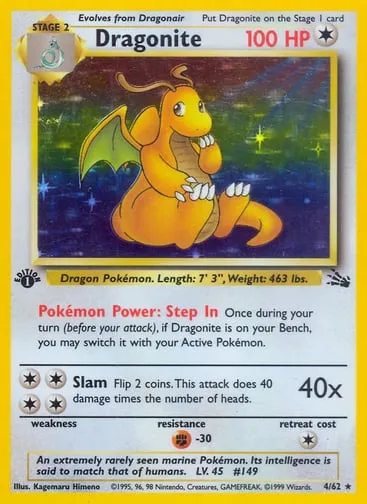
Rare Holo
- Set
- Fossil
- Number
- 4/62
- Rarity
- Rare Holo
Market price via TCGplayer (through Scrydex); graded values via Scrydex. Card image via Scrydex. CardOps is an independent tool, not affiliated with any publisher, marketplace, or grading company.
Fossil's Dragonite is a set staple, not a headline chase card, and that is exactly what makes it worth understanding. The gap between its two printings is the whole lesson.
The 1999 Fossil Dragonite holo shows up in a lot of vintage boxes, and it gets priced wrong a lot too. It is not a card that turns heads the way a Charizard does, but it moves steadily, and the printing on the card, not the Pokemon on it, is what actually sets the number. Get that part right and pricing it at your table is straightforward.
What it is
Dragonite, number 4 of 62, is a Rare Holo from the 1999 Fossil set, one of the original three English base expansions. It carries the same holo pattern and stock as the rest of that era's holo rares. There is no alternate art or special illustration version to confuse it with. The whole story is printing and condition.
Why the printing is the price
Fossil shipped in two runs: 1st Edition, marked with the small edition stamp, and the far more common unlimited print. TCGplayer market on this card currently runs about $470 for 1st Edition holofoil against roughly $190 for unlimited holofoil, a spread of about 2.5x for the same card in the same grade of play. There is no plain holofoil variant here worth quoting separately; the printing itself is the variant that matters. Before you price a copy, check for the edition stamp. Quoting the wrong printing off a general market number is the single most common way dealers under- or overprice this card.
How condition and grade move value
Like most 25-plus-year-old cardboard, this one shows its age: edge wear, whitening, and print lines are common on raw copies. A clean raw copy in the unlimited print is a $190-ish reference; a heavily played one is worth a fraction of that. The grading spread on this card is wide, since a vintage holo that grades out gem mint is genuinely scarce next to the raw supply still floating around from original boxes. Grade honestly at the table. A buyer who has handled vintage before will spot a scratch or a soft corner fast, and pricing past it just kills the sale.
Pricing it at a show
Start with the printing: confirm 1st Edition versus unlimited before you quote anything, since that alone moves the price by more than 2x. From there, anchor to recent sold comps for that exact printing and condition rather than a single listing you remember from last month; vintage comps move around more than modern singles do. If a copy is rough, price it as a played vintage holo, not as a near-mint one with a discount tacked on. Comp-based pricing works the same way here as it does on anything else in the case: real recent sales, not hope.
Questions dealers ask
Is $190 the price I should quote?
It is a dated market reference for a raw, unlimited holofoil copy as of the date shown, not a live quote. Confirm the printing and check recent comps for the exact condition before you buy or sell.
Does the 1st Edition stamp really matter that much?
Yes. 1st Edition holofoil runs roughly 2.5x unlimited holofoil on this card. Always check for the stamp before pricing a Fossil-era holo; quoting the wrong printing is an easy way to leave money on the table or overcharge a buyer.
Is this card worth stocking?
It is steady vintage demand at an accessible price point rather than a headline chase card. It turns reliably at shows because buyers who collect the set, or just like vintage holos, know it on sight.