
Card spotlight
Mew ex (151): What It Is and What It's Worth
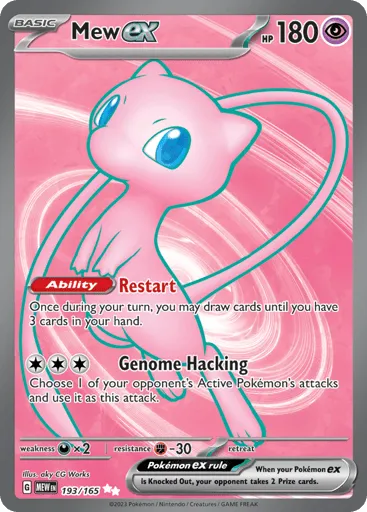
Ultra Rare
- Set
- 151
- Number
- 193/165
- Rarity
- Ultra Rare
Market price via TCGplayer (through Scrydex); graded values via Scrydex. Card image via the card's image source (Scrydex for English cards, pokemontcg.io for older rows). CardOps is an independent tool, not affiliated with any publisher, marketplace, or grading company.
Mew ex is the card in the 151 set that everybody can afford and almost everybody wants. That combination is rare, and it is exactly why it belongs in your case.
Most chase cards price out one or two buyers per show. Mew ex does something different: it sells to the kid with a twenty, the nostalgia buyer rebuilding a childhood set, and the grader looking for a cheap submission with upside. Here is what the card is, why it holds that kind of broad demand, and how to price a raw copy without guessing.
What it is
Mew ex is the Ultra Rare full art pull from 151, Scarlet & Violet's tribute set to the original 150 species plus Mew itself. The art puts Mew front and center against a clean background, and the set's nostalgia pull means this one gets opened constantly, which keeps supply high and the price approachable compared to the set's special illustration rares.
Why it is a chase card at this price point
Most of what you hang in a case at four figures only moves for a handful of collectors a show. Mew ex moves for almost anyone who walks up, because the entry price is a few dollars and the upside story is real: pull a clean one, send it in, and a PSA 10 trades for many multiples of the raw price. That spread is what keeps buyers interested even on a card this common to find.
How condition and grade move the number
A full art card like this one lives or dies on edges and surface. Whitening along the border and light scuffs across the art are the two things that knock a copy out of gem-mint contention, and buyers who plan to grade will check both under a light before they pay. The gap between a played copy and a true gem is wide here precisely because the raw price is low and the graded price is not: treat every copy you buy as a potential grading candidate and price accordingly, rather than assuming a flawed one is still worth top raw dollar.
Pricing it at a show
Anchor to recent comps for a raw holofoil copy, not to what a graded sale pulled last week. The two markets move independently, and a dealer who quotes a buyer the PSA 10 number for a raw card either loses the sale or loses money. Keep your cost basis recorded in your inventory so a quick negotiation on a low-ticket card like this never quietly erodes your margin across a whole stack of them.
Questions dealers ask
Is $29 the price I should sell it for?
It is a dated market reference for a raw holofoil copy as of the date shown, not a live quote. Check recent comps for the exact condition before you price a sale.
Is it worth grading a copy?
PSA 10 market est. ~$223, well above the raw price above, which is why dealers submit cheap, clean full arts like this one. Grading fees and turnaround time still eat into that spread, so run the math on a specific copy before you send it in.