
Card spotlight
Shining Charizard (Neo Destiny): What It Is and What It's Worth
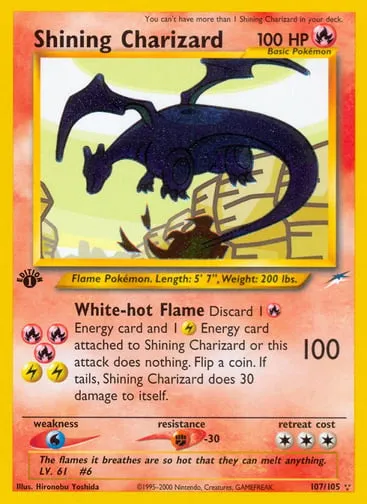
Rare Shining
- Set
- Neo Destiny
- Number
- 107/105
- Rarity
- Rare Shining
Check prices: eBay sold · TCGplayer
CardOps may earn a commission on purchases made through these links.
Market price via TCGplayer (through Scrydex); graded values via Scrydex. Card image via the card's image source (Scrydex for English cards, pokemontcg.io for older rows). CardOps is an independent tool, not endorsed by any publisher or grading company.
Before alt arts and secret rares were a whole category, there was Shining Charizard. Here's what it is and how to think about pricing one at your table.
Neo Destiny introduced a rarity that had not existed before it: Shining Pokemon, printed in their shiny color palette and slotted into the set above the normal numbering. Shining Charizard was the headline of that run, and more than two decades later it is still one of the cards a buyer will stop and ask about by name. If you stock vintage, understanding why this one holds a premium, and how to grade and price a raw copy, keeps you from either underselling it or quoting a number you cannot back up.
What makes it a chase card
Three things line up here. Charizard was already the franchise's most collected Pokemon by the time Neo Destiny shipped in 2002. The Shining rarity was brand new, a one-set gimmick that printed a small handful of Pokemon in their shiny coloring with a numbering slot beyond the set's normal 105 cards, which kept the print run tight relative to demand. And unlike most Rare Holo cards from the era, a Shining card never got a non-holo version to soak up collector attention. That combination, a beloved subject in a genuinely scarce slot, is the same pattern that drives most of the modern chase cards you see at a table, just twenty years earlier.
How condition and grade move the number
This is a vintage card from an era when players actually played with their pulls, so clean raw copies are harder to find than the card's print run alone would suggest. Centering runs tight on Neo-era holos, and the holo pattern shows whitening at the edges and scratches across the foil more readily than a modern card's textured surface does. A raw, Near Mint copy anchors the figure above; a played copy with edge wear or print-era surface scratches sells for meaningfully less, and the honest move at the table is to point out a flaw before the buyer finds it.
Grading changes the scale entirely here. PSA 10 copies have traded at a market estimate of roughly $32,464, more than eight times the raw figure in this snapshot. That gap is wide enough that a clean raw copy is almost always worth sending in rather than selling across the table. Treat that number as a market estimate, not a comp or a guaranteed sale price. It moves with the grading market and with how many fresh PSA 10 pops hit at once.
Pricing it at a show
Start from recent sold comps for this exact printing and condition, not from the highest listing you can find online. A card with this much name recognition attracts optimistic asks, and your job is to price to what it actually clears. The figure above is a dated TCGplayer market reference, not a live quote, and this card has held flat over the past month, so check current comps before you commit cash to a buy or quote a number across the table.
Know your floor before the conversation starts. A single card near four figures can move a whole show's profit on its own, so record what you paid and what you need to clear before you negotiate, not after.
Buying it from another dealer or a collector
At this price point, a buy is a cash-flow decision as much as a card decision. Confirm the printing against your own reference before you quote a number: this card has no plain holofoil version, only the unlimited holofoil printing quoted above and a scarcer first edition holofoil that prices on its own, much higher scale. Factor the buy into your show's cash box the same way you would any other high-dollar purchase, and decide upfront whether you are buying to flip raw or to send it in for grading.
Questions dealers ask
Is the price above current?
It is a dated TCGplayer market reference as of the date shown, not a live quote. Check recent sold comps for the exact printing and condition before you buy or sell.
Does grading change what this card is worth?
Yes, substantially. PSA 10 copies have traded at a market estimate well above the raw price. The snapshot here is a raw reference point for the unlimited holofoil printing; a graded copy prices on its own scale.
Is first edition Shining Charizard a different card to price?
Yes. The first edition holofoil printing is far scarcer than the unlimited printing quoted here and trades at a significantly higher price. Confirm which printing you have before quoting a number.