
Card spotlight
Charizard (Base): What It Is and What It's Worth
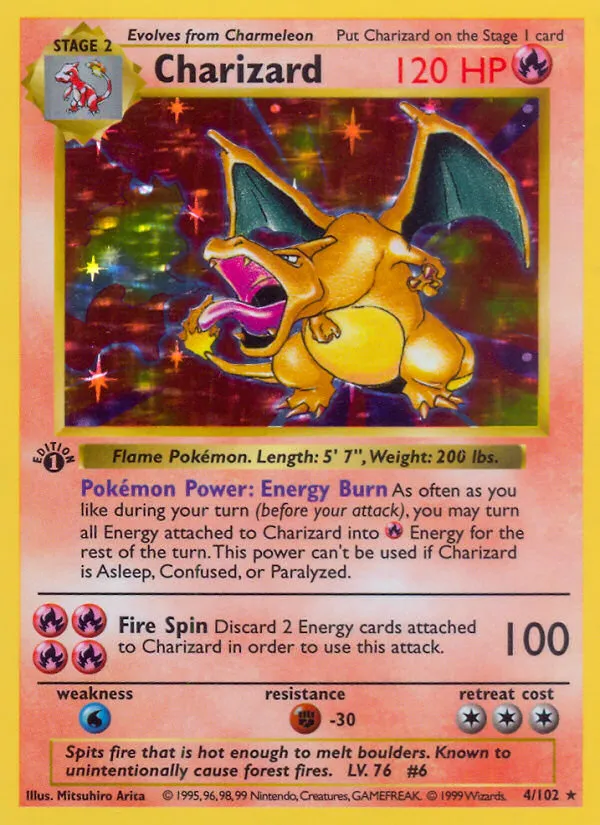
1999 Base Set Holo Rare
- Set
- Base
- Number
- 4/102
- Rarity
- Rare Holo
Market price via TCGplayer (through pokemontcg.io); graded values via Scrydex. Card image via pokemontcg.io. CardOps is an independent tool, not affiliated with any publisher, marketplace, or grading company.
No card says vintage Pokemon like the 1999 Base Set Charizard. It is the card that started the hobby for a lot of dealers, and it still turns heads across the table. Here is how to think about its value.
The Base Set Charizard, number 4 of 102, is the most iconic Pokemon single ever printed. For a vendor, that fame is a double edged sword: everyone knows the name, so everyone has an opinion on the price. The number above is a raw, holofoil market reference as of the date shown, but with a card like this, the print run and the grade matter far more than any single figure.
Edition is the first question
Not all Base Set Charizards are the same card. First Edition (with the stamp) sits at the very top, Shadowless comes next, and Unlimited is the most common and most affordable. The gap between them is large, so the very first thing to confirm at the table is which one you are holding. Price an Unlimited copy like a First Edition and you will lose the sale; price a Shadowless like an Unlimited and you leave serious money behind.
Grade changes everything
On a card this old and this chased, condition is the biggest lever of all. A clean raw copy and a graded gem trade on completely different scales: as of the snapshot above, a PSA 10 example sits well into five figures while a raw copy trades near the reference price shown. Centering, holo scratches, and edge wear all move the number fast. Grade honestly, note flaws out loud, and let a buyer decide, rather than hoping they miss the whitening on the back.
Pricing it at a show
Confirm the edition, assess condition honestly, then anchor to recent comps for that exact printing and grade, not to the highest number you have seen quoted. A card with this much fame attracts optimistic asks; your job is to price to what it actually trades at. Keep your cost and floor recorded so a friendly negotiation on a four figure card never pushes you underwater.
Questions dealers ask
Is this price current?
It is a dated market reference as of the date shown, for a raw holofoil copy. Prices on a card this liquid move; always check recent comps for the exact edition and grade before you buy or sell.
Why is a graded one worth so much more?
Grading certifies condition and authenticity, and on a vintage chase card that certainty commands a large premium. A PSA 10 trades on a different scale entirely from a raw copy, which is why confirming grade matters before you price.
How do I tell First Edition from Unlimited?
Look for the First Edition stamp on the left side of the artwork, and check for the shadow along the right edge of the art box. First Edition has the stamp; Shadowless lacks the drop shadow; Unlimited has the shadow and no stamp.