
Card spotlight
Umbreon VMAX (Evolving Skies): What It Is and What It's Worth
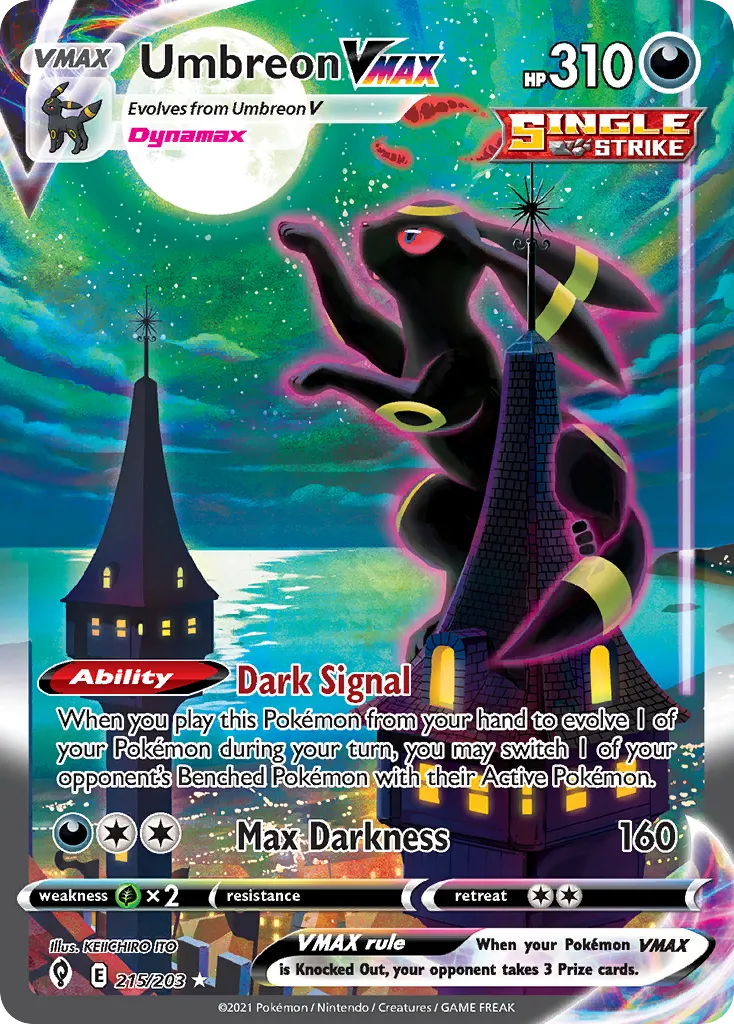
Alternate Art Secret Rare
- Set
- Evolving Skies
- Number
- 215/203
- Rarity
- Secret Rare (Alternate Art)
Market price via TCGplayer (through pokemontcg.io); graded values via Scrydex. Card image via pokemontcg.io. CardOps is an independent tool, not affiliated with any publisher, marketplace, or grading company.
Few modern Pokémon singles carry a nickname. This one does: dealers just call it Moonbreon. Here is what it is and how to think about its value at your table.
The Umbreon VMAX alternate art from Evolving Skies is one of the most recognizable chase cards of the modern era. If you work shows, you already know the look on a buyer's face when they spot one in your case. Understanding why it holds value, and how condition moves that value, helps you buy it right and price it with confidence.
What makes it a chase card
Three things stack up here: a beloved Eeveelution, a full-art illustration built around a moonlit night scene that reads more like art than a game piece, and a Secret Rare slot that keeps supply tight relative to demand. That combination, a fan-favorite subject plus limited print against strong collector and player demand, is the classic recipe for a card that holds value across market cycles rather than fading with the set.
How condition moves the number
On a card this sought-after, condition is everything. Centering, edge whitening, and surface scratches separate a clean copy from a played one, and the gap widens fast at the top of the market. Grade it honestly at the table, price a raw Near Mint copy near the top of your range, and note visible flaws rather than hoping a buyer misses them. The dated snapshot above is a raw reference point, not a guarantee. Verify against current comps before you commit to a number.
What grading changes
A graded copy trades on a different scale than raw. Recent Scrydex data puts a PSA 10 well into four figures above the raw market number, which is a reminder that grading isn't just a formality on a card like this, it's a separate market. Over the last 30 days the raw market price has held roughly flat, so this isn't a card that's swinging wildly right now, but always re-check before quoting an old number.
Pricing it at a show
Anchor to recent sold comps for the exact printing and condition, not to the highest listing you can find. A card with a nickname attracts optimistic asks; your job is to price to what it actually sells for. Keep your cost and floor recorded so a friendly negotiation never pushes you underwater on a card this valuable, and confirm the buyer is looking at a genuine alternate art before you talk numbers.
Questions dealers ask
Is the price above current?
It is a dated market reference as of the date shown, not a live quote. High-demand cards move; always check recent comps for the exact printing and condition before you buy or sell.
Does grading change what it's worth?
Yes, significantly. A graded copy trades on a different scale than raw, and the grade itself drives the number. The snapshot here is a raw reference point.
Why is it nicknamed Moonbreon?
Collectors gave it the nickname for its dark, moonlit alternate-art illustration. It's become the informal name dealers and buyers use at the table.