
Card spotlight
Lugia (Neo Genesis): What It Is and What It's Worth
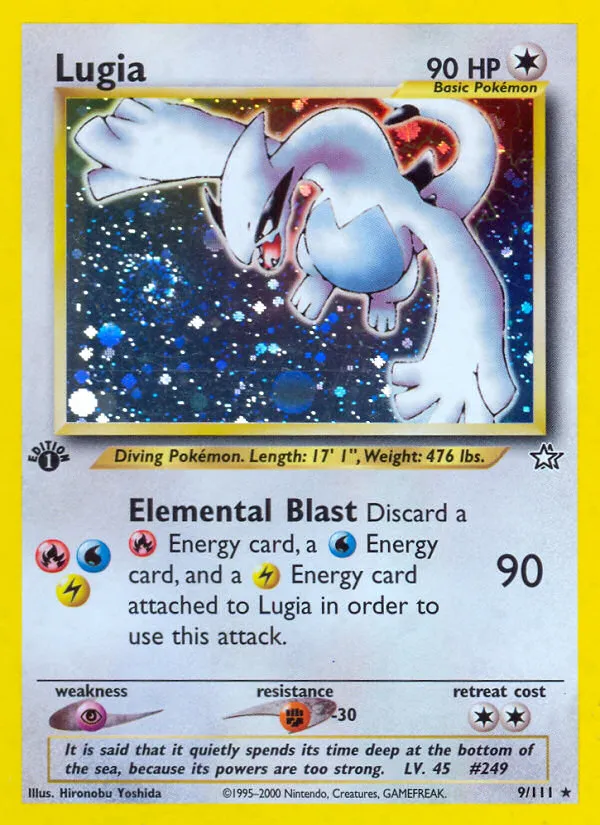
Holo Rare
- Set
- Neo Genesis
- Number
- 9/111
- Rarity
- Rare Holo
Market price via TCGplayer (through pokemontcg.io); graded values via Scrydex. Card image via pokemontcg.io. CardOps is an independent tool, not affiliated with any publisher, marketplace, or grading company.
Once a vintage buyer has priced themselves out of Base Set Charizard, this is usually the next card they ask for. Here is what the Neo Genesis Lugia is, and how to price one without guessing.
Lugia 9/111 opened the Neo era in 2000, and it has stayed one of the few non-Base vintage holos that a walk-up buyer will name out loud. It is also one of the least forgiving cards in the hobby to condition. Two copies that look similar across a table can be separated by a wide margin once you get a loupe on the edges. If you stock vintage, it is worth knowing exactly which printing you are holding and what that copy is really worth.
What the card is
Lugia is card 9 of 111 in Neo Genesis, the set that carried Pokemon from the original Base Set era into the Gold and Silver generation. Lugia was the mascot of that generation, and the card got the treatment: a holo rare with the legendary bird front and center. That combination of first-set-of-an-era status and a headline Pokemon is what separates it from the dozens of other vintage holos that never found a second life.
Two printings matter commercially. The 1st Edition print carries the edition stamp and trades well above the unlimited print. The unlimited print is the one you will see most often in collections and in dealer stock, and it is the printing the snapshot above refers to.
Why it holds value beyond Base Set
Vintage demand is not evenly spread. A handful of cards carry the whole category, and buyers work down a short mental list: Base Set Charizard, then Blastoise and Venusaur, then a small group of era-defining holos where Neo Genesis Lugia sits near the top. It benefits from nostalgia among the people who were the right age in 2000, and those buyers are now the ones with money at a show.
The practical read for a vendor is that this card gets asked for by name. You do not have to sell anyone on it. What you have to do is have an honest number ready and be able to defend it.
Why condition is brutal on this one
Neo-era holos are notorious for edge whitening and surface scratching, and Lugia's dark holo pattern shows both. Centering is the other common killer. A copy that grades clean is genuinely rare relative to how many were opened.
The population data makes the point. As of the snapshot date above, PSA's report for this card lists roughly 19,000 graded copies, and only about 60 of them are PSA 10. Most of the population sits between grade 5 and grade 8. When you price a raw copy, assume it lands in that middle band unless it clearly proves otherwise, and price your buy accordingly.
Raw, graded, and the gap between them
Raw and graded copies of this card trade on different scales. A slabbed copy carries a verified grade and a resale market that raw simply does not have, and the spread widens sharply at the top. That is why the snapshot above is labeled as a raw, unlimited holofoil market figure. It is a reference point for one specific version of the card, not a value for every copy with Lugia on it.
Two things follow from that. First, never quote a graded comp when you are pricing a raw card, or the reverse. Second, on a card this condition-sensitive, the question of whether to send a clean raw copy to grading is a real business decision with real fees attached, not a reflex. Our guide on graded versus raw stock works through that tradeoff.
Pricing it at a show
Work in this order. Identify the printing first, since 1st Edition and unlimited are different cards commercially. Then grade the copy in front of you honestly, checking centering, edges, and surface under a light. Then anchor to recent sold comps for that exact printing and condition, not to the highest active listing you can find on a marketplace.
The market figure above was roughly flat over the 30 days before the snapshot, which is typical for established vintage: it moves in slow steps, not daily swings. That is an argument for keeping a written cost and floor for each copy rather than repricing from memory. In CardOps, a card in your inventory carries its cost basis and its live market value together, so a friendly negotiation at the table never quietly pushes you below your own floor.
Questions dealers ask
Which printing does the price above refer to?
The unlimited holofoil printing, raw. The 1st Edition print of this card trades well above unlimited, so quoting one number for both is the fastest way to misprice a copy. Check for the edition stamp before you price anything.
Is that price current?
No. It is a dated TCGplayer market reference as of the date shown, not a live quote. Always check recent comps for the exact printing and condition before you buy or sell.
Is a raw copy worth grading?
Only if it has a real shot at a high grade, since grading fees and turnaround come out of your margin either way. Neo-era holos punish edge wear and off-centering, and the population data shows how few copies reach the top grades. Assess the copy honestly before you pay.