
Card spotlight
Leafeon VMAX (Evolving Skies): What It Is and What It's Worth
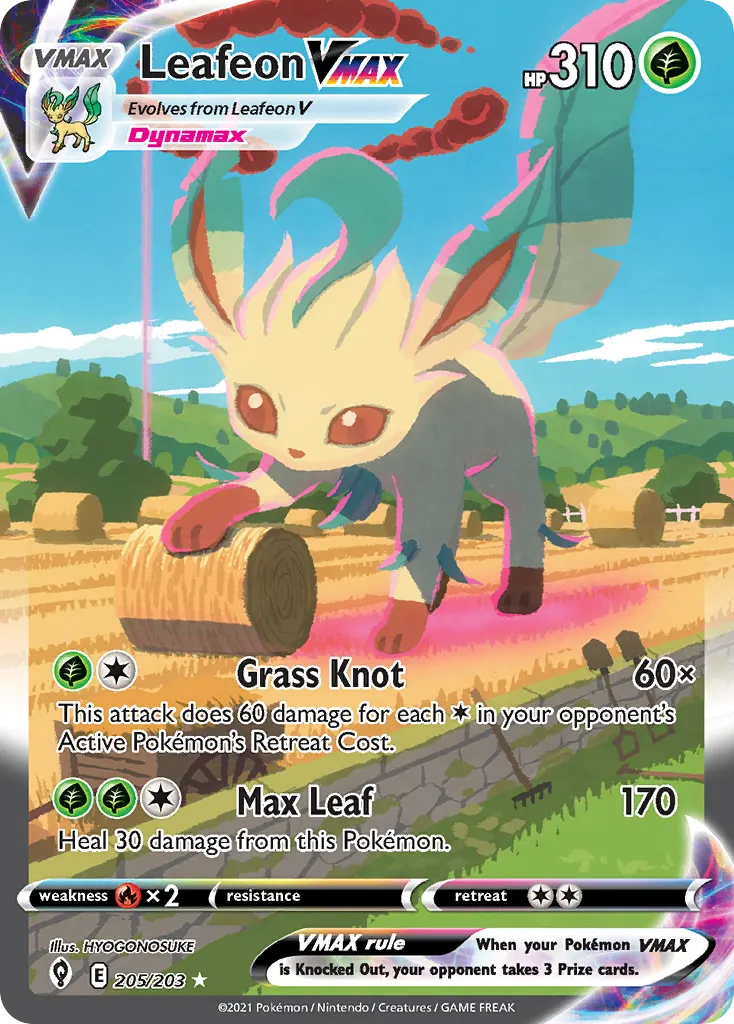
Alternate Art Secret Rare
- Set
- Evolving Skies
- Number
- 205/203
- Rarity
- Secret Rare (Alternate Art)
Market price via TCGplayer (through pokemontcg.io); graded values via Scrydex. Card image via pokemontcg.io. CardOps is an independent tool, not affiliated with any publisher, marketplace, or grading company.
Every dealer working Evolving Skies knows what the Umbreon alt art does to a case. Leafeon is the one that does most of the same work for a fraction of the buy-in.
The Leafeon VMAX alternate art is one of the Eeveelution alt arts from Evolving Skies, and it sits in an awkward, useful place: expensive enough to anchor a case and pull people to your table, cheap enough that you can actually keep one in stock. If you are deciding whether to buy one at a show, or what to ask for the copy already in your binder, here is the honest picture.
What the card actually is
Leafeon VMAX card number 205/203 is an alternate art Secret Rare from Evolving Skies, the 2021 Sword and Shield set built around the Eeveelutions. The alternate art treatment replaces the standard card frame with a full illustration, so the art runs edge to edge instead of sitting in a window. Collectors buy these as art first and as game pieces second.
Two things about the print matter at the table. It is a Secret Rare, meaning its number sits above the printed set total, so pull rates are thin. And it comes in one printing, so there is no reverse or non-holo version to confuse a buyer with. If someone hands you a 205/203, there is only one card it can be, and the only question left is condition.
Why it carries a case
Evolving Skies is one of the most in-demand modern sets in the hobby, and the alt art Eeveelutions are the reason. Umbreon takes the headlines and the four-figure asks. The rest of the run, Leafeon included, rides in that slipstream: same set, same illustration style, same buyer walking your table looking for the one they collect.
Leafeon has its own pull too. Eeveelution collectors buy by favorite, not by price rank, and plenty of them are Leafeon people who were never going to spend Umbreon money. That gives the card a steadier demand floor than a card whose only story is that it is expensive.
For a vendor, that combination is what you want in a case anchor. It is recognizable across the aisle, it starts conversations, and it moves at a price a normal show buyer can say yes to on the spot.
What the snapshot above says
The figure in the card block is the TCGplayer market price for a raw holofoil copy as of the date shown. It is a dated reference point, not a live quote and not a ceiling. Listings run well above it and beaten copies sell well below it.
Two things worth reading alongside it. Over the 30 days before that snapshot, the market number moved less than two percent, so this is not a card in the middle of a spike or a slide. And the graded side sits closer to raw than dealers expect: the PSA 10 market estimate was roughly $550 on the same date, a smoothed number from a grading price source rather than a record of any single sale.
That narrow gap is the whole strategic story of this card. On a Moonbreon, a top grade multiplies the number. Here it adds a few hundred dollars before you subtract grading fees, shipping, insurance, and months of waiting. Run those numbers before you send anything.
How condition and grading move the number
Alt arts are unforgiving. The full-bleed illustration means there is no border to hide anything, so edge whitening reads immediately, and the large flat color areas show surface scratches and print lines under a light. Centering is the other common killer on this print run.
The population side matters as much as the condition side. Evolving Skies was opened in enormous volume and graded just as heavily, so top-grade copies of this card are not rare in any meaningful sense. On the same dated snapshot, PSA had graded more than eleven thousand copies at a 10. A card with that kind of graded supply prices off demand, not scarcity, which is exactly why the raw-to-slab gap stays tight.
Practical version for your table: price raw copies honestly by condition, buy graded copies only when the slab is priced close to what a clean raw is worth, and do not pay a grading premium on the assumption that a 10 is a lottery ticket. On this card it is not.
Pricing it at a show
Anchor to recent sold comps for the exact printing and condition, never to the most optimistic listing on a marketplace. A card with an Eeveelution on it attracts hopeful asks, and matching those asks is how a case anchor turns into a card that sits in your binder for six months.
Set your ask, then set your floor before the first buyer touches it. On a mid-hundreds card, a friendly ten percent negotiation and an overlooked cost basis is the difference between a good day and a job you did for free. Write the cost down when you buy it, not later from memory.
CardOps keeps market value and trend history by set and condition on the card record, so the number you quote came from somewhere you can point to. Graded price data and eBay sold comps sit in Pro. Either way, the point is the same: quote from a source, keep your floor visible, and let the buyer see you are not guessing.
If you want the fuller method rather than one card's worth of it, start with how to price cards to market at a show.
Questions dealers ask
Is the price shown current?
No. It is a dated market reference for a raw copy as of the date printed in the card block, not a live quote. Modern alt arts move with set demand and reprint news, so check recent sold comps for the exact printing and condition before you buy or sell.
Is Leafeon VMAX alt art worth grading?
Usually only if the raw copy is genuinely clean and you already know the current graded spread. On the snapshot above the PSA 10 estimate sat only modestly above the raw market price, and grading fees, shipping, insurance, and turnaround time all come out of that gap. Run the math on the specific card in your hand rather than the card in general.
How does it compare to the Umbreon VMAX alt art?
Same set, same illustration style, very different price tier. Umbreon is the headline chase and prices like one. Leafeon is the accessible version of that look, which makes it easier to stock, easier to sell in a single show, and far less capital tied up in one sleeve.
How do I tell a real 205/203 from a fake?
Check the same things you would on any high-value modern card: the texture of the holo pattern, the black core visible at a clean edge, print sharpness on small text, and the weight and feel against a known-good copy from the same set. If a deal at a show feels too cheap for the card, it usually is.